
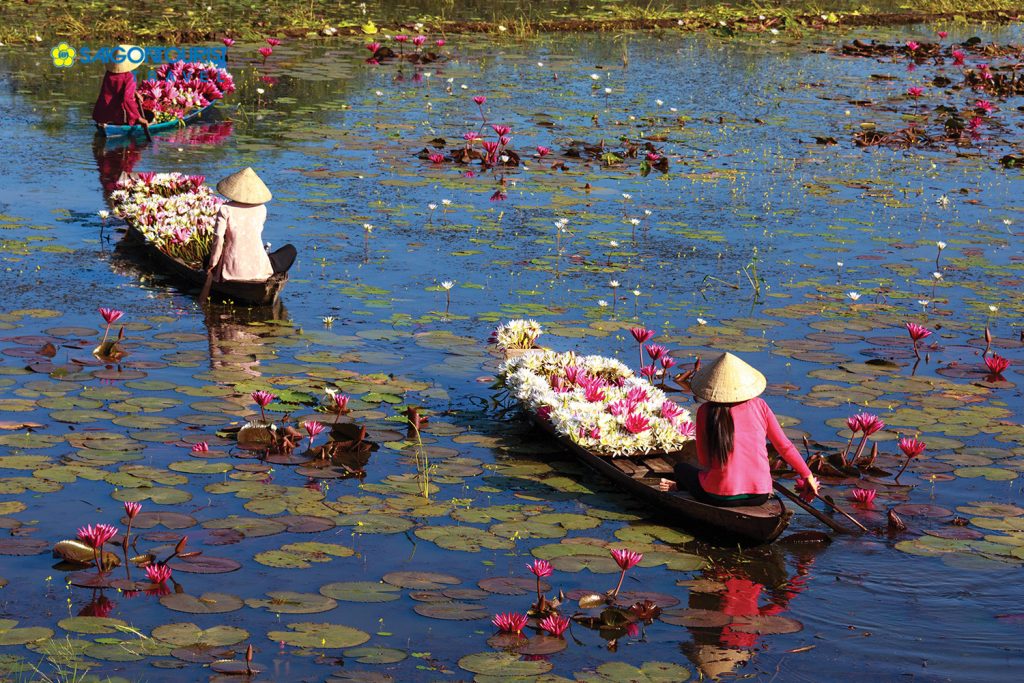
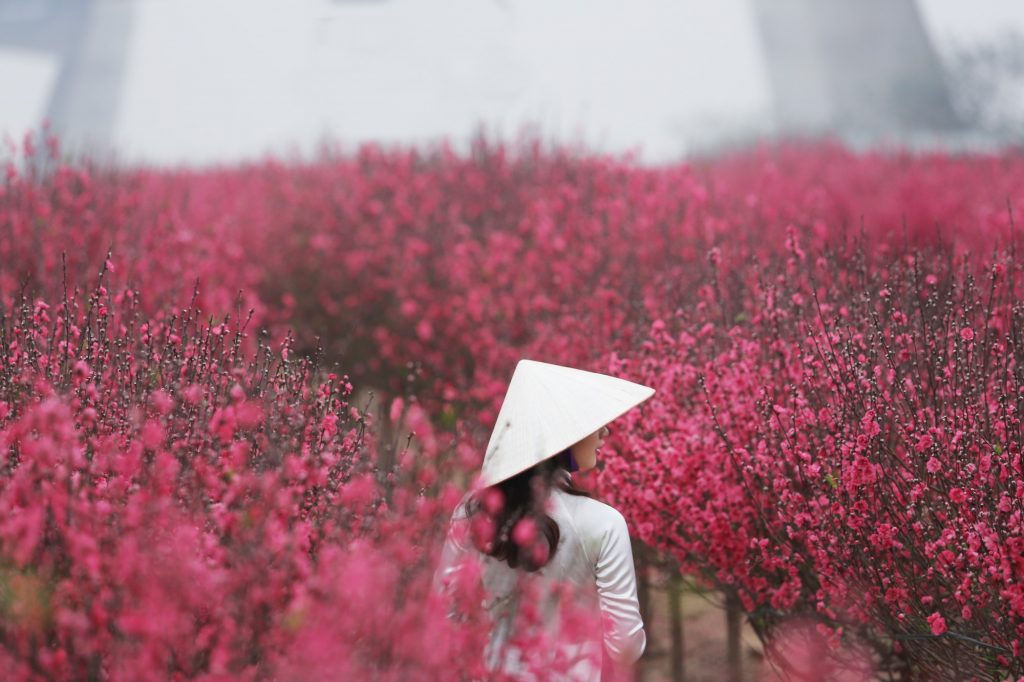
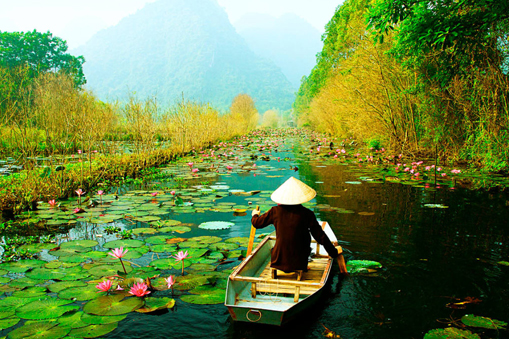
Hanoi is the capital of Vietnam and the country’s second largest city is known for its centuries-old architecture and a rich culture with Southeast Asian, Chinese and French influences. Hanoi is located in northern region of Vietnam, situated in the Vietnam’s Red River delta. As the capital of Vietnam for almost a thousand years, Hanoi is considered one of the main cultural centers of Vietnam.
Highlights
- Hanoi is a very picturesque city, the leafy metropolis sometimes dubbed the “Paris of Asia.” With its tree-fringed boulevards, more than two dozen lakes and thousands of French colonial-era buildings, Hanoi is a popular tourist attraction and one of only a few Asian capitals to retain its historic charm amid rapid modernization and population growth.
- In 2015, Hanoi ranks #4 in Trip Advisor’s list of the World’s Best Destinations (Travellers’ Choice).
Weather
- Hanoi and North Vietnam has a distinct winter and summer season. The cool but mostly dry winter lasts from November to April when temperatures average 17-22°C with the coldest months being January – March.
- Summer lasts from May to October when it is hot and humid and the region experiences its highest rainfall. July to September is often the wettest months of the year.
Best time to visit:
- March to June, September to December.
Ha Long Bay, meaning “descending dragon”, a magnificent scenic spot, Vietnam is located in Quang Ninh Province northeast Vietnam, is known for its emerald waters and thousands of towering limestone karsts and isles in various sizes and shapes topped by rainforests.
Hạ Long Bay is a center of a larger zone which includes Bái Tử Long bay to the northeast, and Cát Bà islands to the southwest.
Highlights
- In 1994, the UNESCO’s World Heritage Committee has inscribed the Hạ Long Bay in the World Heritage List and listed in the New 7 Wonders in 2012 according to its outstanding examples representing major stages of the Earth’s history and its original limestone karstic geomorphologic features.
Weather
- The climate of the bay is tropical, wet, Sea Islands, with two seasons: hot and moist summer, and dry and cold winter. The average temperature is from 15 °C- 25 °C, and annual rainfall is between 2 meters and 2.2 meters. It’s cloudy and rainy in autumn and chilly in winter.
Best time to visit:
- The best time to visit is from March to August, because during this time, tourists have the chance to shoot exotic photos with blue sky and sea as smooth as mill pond.
Hoi An is a city on Vietnam’s central coast known for its well-preserved Ancient Town. The former port city’s melting-pot history is reflected in its architecture, a mix of eras and styles from wooden Chinese shop houses and temples to colorful French colonial buildings, ornate Vietnamese tube houses and the iconic Japanese Covered Bridge with its pagoda. Mixing together with Vietnamese design, Chinese and Japanese accents melt and create a picture-perfect Hoi An of the late 19th century, which it has somehow remained mostly intact since. The culture & heritage is mostly from the Cham people. The second major influence was from the Chinese, firstly from traders but especially the escaping Ming Dynasty armies who after settling in Hoi An for some years moved further south and created Saigon as a major trading port. The third and last major influence of culture & heritage was from the Vietnamese and is fairly recent and only came after the Cham lost control of this area. The town used to harbor foreign traders back in the 17-18th, and once is an important heavily-frequented trading port in Southeast Asia. The foreigners come from all corners of the world, but mostly are Chinese and Japanese nationalities. Ancient and peaceful, Hoi An is one of the most popular destinations in Vietnam that caters to travellers of all tastes and across the continents. The little town is just the perfect candidate of what Vietnam tourism ministry is aiming to show to the world.
Highlights
- In 1999, UNESCO formally recognizes Hoi An as a World Heritage Site. There are the things that make up the reputation.
- Hoi An is home to many temples, pagodas and the ancient homes that bear its very unique mark. The density of such sites is unlike any other in Vietnam. These places carry with them the history of Hoi An.
Weather
- The heat reaches its peak on the months from June to August when the highest temperature measured during day time is 38 Degree Celsius while the lowest temperature only drops at 21C Degree at night.
- Winter-like weather falling in the town from November to January bring coldest days to Hoi An when daily average temperature is between 19 to 24 Degree Celsius. However, this coldness seems to be of no concern for tourists from Northern Hemisphere.
Best time to visit:
- The most annoying factor in Hoi An should be its rainy season, lasting quite long from September to January. Its constantly heavy shower, which may also occur with typhoon and cause floods sometimes, can accidentally disturb your wonderful trip. During the damp season Hoi An sees a sharp decrease in the number of visitors.
- On the other hand, Hoi An’s dry season from February to May is the best time to visit the town, since its weather becomes very mild and beautiful with moderate temperature, low humidity, less rain and warm sunshine. For ones who enjoy sunbathing on famous beaches near Hoi An like Cua Dai Beach or An Bang Beach, delaying your trip to the end of May or beginning of June is recommended.
- If you are lucky enough to arrive at the town on the 14th day of a lunar month, Hoi An will be much more charming with its Full Moon Festival and “Old Street Night” exclusively available on that day.
Renowned as the most royal city in Vietnam, Hue has enough charm to keep you staying as long as you can afford the time to visit. Located on the bank of Song Huong- Perfume River; Hue, the capital of Thua Thien Hue province in Central Vietnam, Hue is a city in central Vietnam that was the seat of Nguyen Dynasty emperors and the national capital from 1802-1945. A major attraction is its vast, 19th-century Citadel, surrounded by a moat and thick stone walls. It encompasses the Imperial City, with palaces and shrines; the Forbidden Purple City, once the emperor’s home; and a replica of the Royal Theater. The city represents the outstanding demonstration of the power of the vanished Vietnamese feudal empire, including a complex of monuments, tombs and pagodas that attract tourists coming from all over the world.
Highlights
- Hue is well known for its historic monuments, which have earned it a place in UNESCO’s World Heritage Sites.
- Besides visiting ancient monuments and tombs, coming to Hue, you can also have a chance to bath and lying under the sun on the most wildly beautiful beaches in Vietnam. Thuan An and Lang Co beach are among the most wonderful ones.
Weather
- Hue features a Tropical monsoon climate. The dry season is from March to August, with high temperatures of 35 to 40 °C (95 to 104 °F).
- The rainy season is from August to January, with a flood season from October, onwards. The average rainy season temperature is 20 °C (68 °F), sometimes as low as 9 °C (48 °F). Spring lasts from January to late February.
Best time to visit:
The gloomy sky that the tiny rain drops involved, it is said to add more soul to Hue sceneries, especially the Perfume river and the Old citadel. It means October to March is the ideal time to visit.
For those who can stand the heat in exchange for endless blue sky, the summer months are the way to go. Try to avoid July and August which are high seasons for domestic travels and also notorious for the scorching heat.
Da Nang is one of the major port cities in Vietnam and the biggest city on the South Central Coast of Vietnam; the city is situated on the coast of the Eastern Sea, at the opening end of the Han River The third largest city in Vietnam, Da Nang is in close proximity to Hue- 3 hours North and Hoi An- 30 minutes South, which makes it a perfect stop point for those who need a break from touristy areas. Da Nang is growing into one of the most organized urban area. Da Nang is a coastal city in central Vietnam known for its sandy beaches and history as a French colonial port. It’s a popular base for visiting the inland Bà Nà hills. Here the Hải Vân Pass has views of Da Nang Bay and the Marble Mountains, 5 limestone outcrops that are home to pagodas and caves containing Buddhist shrines.
Highlights
- Da Nang is also a place for authentic local cuisines. Due to its low volume of visitors, residents’ lives take place the way they have been for years. Many street vendors can be found in the market and along Han River, offering My Quang (Quang noodle).
- Da Nang is probably most known among Vietnamese for its speedy real estate and private property development.
Weather
- Temperature is highest from May to September, hovering around 24 Celcius degree. Unlike Hue, the proximity of Da Nang to Pacific Ocean keeps it cooler than it should be. In other months, the temperature does not drop below 20.
- Rainfall level is highest in winter month from September to January.
Best time to visit:
- The best time to visit Danang for sunbathing is February to May the best time to visit Da Nang. At this time the sun is less fierce.
- Between June and August the city and its beaches do get very crowded as Vietnamese people take their annual leave.
Ho Chi Minh City, formerly named and also referred to by some Vietnamese as Saigon, is the largest city in Vietnam. Ho Chi Minh City is a city in southern Vietnam famous for the pivotal role it played in the Vietnam War. It’s also known for its French colonial architecture, including Notre-Dame Basilica, made entirely of materials imported from France, and the neo-classical Saigon Central Post Office. Food stalls line the city’s streets, especially around bustling Ben Thanh Market. Modern office skyscrapers, amidst Oriental style pagodas, create a dynamic urban area in very special sense. Following the fall of Saigon in 1975, Saigon was “officially” renamed Ho Chi Minh City. However the old Saigon name is still used by both Vietnamese and foreigners, especially when referring to the most central part of the city. Ho Chi Minh City is the economic center of Vietnam and accounts for a large proportion of the economy of Vietnam. Conquered by French in 1859, the city was influenced by the French during their colonial occupation of Vietnam, and a number of classical Western-style buildings and French villas in the city reflect this.
Highlights
- Today, the city’s core is still adorned with wide elegant boulevards and historic French colonial buildings. The majorities of these tourist spots are located in District 1 and are a short leisurely distance from each other.
- Some of the historic hotels are the Hotel Majestic, dating from the French colonial era, and the Rex and Caravelle hotels are former hangouts for American officers and war correspondents in the 1960s/70s.
Weather
- With a tropical climate of 2 distinctive seasons: dry and wet, it’s suggested that you should pay a visit to Ho Chi Minh City during the dry season, starting from December and lasting until April.
- This period of the year is known to be the hottest, with average temperature of 28 °C (82 °F). The peak is 39 °C (102 °F) around noon time in late April, while the lowest may fall below 16 °C (61 °F) in the early mornings of late December.
Best time to visit:
- Best time to visit the tropical Ho Chi Minh City is in the dry season, which runs from December through to April.
- During the wet season, May to November, there are frequent tropical storms, though these won’t disrupt your travels too much.
- Humidity is moderate in December and begins to decrease from January to April. Hence, if travelling during this period, foreign travellers can escape from the normal sticky weather of Saigon.
Mekong Delta The Mekong Delta in southern Vietnam is a vast maze of rivers, swamps and islands, home to floating markets, pagodas and villages surrounded by rice paddies. Boats are the main means of transportation, and tours of the region often start in nearby Ho Chi Minh City (formerly known as Saigon) or Can Tho, a bustling town in the heart of the delta. An unforgettable trip of seeing the Mekong Delta is to take a boat trip along Mekong River, you will pass swamplands, paddy fields, water buffaloes, tangled fruit orchards, and excited, waving children. In the delta’s town, the river remains the central focus of life, ferrying travellers and goods to market and linking the delta with the world beyond. To explore the the life of local people in Mekong Delta you take a few days in Cai Be, the floating market in Can Tho, and the hillside pagodas of Chau Doc. A visit to the Mekong Delta is so memorable because of the region’s diversity. Everyday scenes include children riding on the backs of water buffalo or cycling to school through country lanes, rice workers stooping in a sea of emerald, market vendors grinning behind stacks of fruit.
Highlights
- The winding waterways of the Mekong Delta make land travel difficult. To overcome this problem, the area has become a hotbed for floating markets. Cai Rang is one of the most famous and best floating markets in the area.
- The Delta is thought to be the ancient capital of the Funan Empire – a multi-ethnic empire that dominated the area from the first to the sixth centuries. After the fall of the Funan Empire the area was much influenced by the Chinese and Khmer Empires.
Weather
- The weather in the region is marked by two major seasons: rainy and sunny. The temperature in both seasons is generally comfortable, though some months are considered more comfortable for traveling.
- The rainy season begins in May and continues through most of November.
- From December until the end of April, Vietnam gets a break from all the rain. During this season, while occasional rains still occur, you can expect clearer blue skies, brilliant green landscapes, and lower levels of humidity.
Best time to visit:
- From December until the end of April, Vietnam gets a break from all the rain. During this season, while occasional rains still occur, you can expect clearer blue skies, brilliant green landscapes, and lower levels of humidity.
Dalat, the capital of Lam Dong Province in southern Vietnam’s Central Highlands, is centered around a lake and golf course, and surrounded by hills, pine forests, lakes and waterfalls. Known as the “City of Eternal Spring” for its distinctive temperate climate, Dalat was developed as a resort by the French in the early 1900s, and many reminders of its colonial heritage remain. Dalat looks like a cross between Vietnam and the French Alps. Many of its hotels and houses were built in a French style during the French colonization. There are many places for tourists interested in architecture to visit, such as Dalat Railway Station, designed by French architects Moncet and Reveron, or ‘Crazy house’ which is also an interesting place to stay.
Highlights
- Dalat is very much a niche tourism town, open to those seeking a respite from the heat of the rest of Vietnam, a change in scenery to lush pine forests and rolling hills, or those seeking world class golf.
- For overseas visitors, it offers mostly a chance to cool down, observe some beautiful landscape and agriculture, view a bit of the French legacy, the Indochine legend and its momentous glories Dalat is also surrounded by some of the best mountain biking, hiking and canyoning opportunities in Vietnam.
Weather
- The climate in Dalat is often called ‘Eternal Spring’ for its pleasantly warm temperatures during the day and quite cool at night, down to perhaps 10oC.
- At 1500m height compared with sea level, Dalat enjoys a cool climate all year round, though the temperature rises slightly during the summer months from May to August and drops to a chilly point at night.
Best time to visit:
- It could be better for visitors to come to Da Lat in the period of time from November to March. It is dry and very comfortable, so that the travelers can totally relax with the clean environment here and visit many fascinating natural destinations like Xuan Huong Lake or The Valley of Love.
Nha Trang is a seaside town, also the capital city of Khanh Hoa Province – on the South Central Coast of Vietnam. Nha Trang is becoming increasingly popular in recent years because of its pristine beach, best scuba diving center of Vietnam as well as lots of interesting places and delicious food to enjoy. Considered Vietnam’s most famous seaside resort-town, Nha Trang attracts foreign tourists for not only its stunningly pristine beaches but also the urban atmosphere of a young tourist city. Nha Trang has consistently maintained its position as one of the most beautiful bays of the world. As viewed from high above, the bay looks like the aquamarine stone sparkling in the sunshine, bounded by miles of smoothly golden sands.
Highlights
- Nha Trang is one of the most important tourist hubs of Vietnam, thanks to its beautiful beaches with fine and clean sand and the clear ocean water with mild temperatures all year round.
- Island hopping, scuba diving, water sports and other sporting activities can be enjoyed. The local cuisine is most famous for fresh seafood and barbecued pork rolled in rice paper.
Weather
- Nha Trang has a tropical savanna climate with a lengthy dry season from January to September
- While most of the South of Vietnam is turned into water for half of a year by monsoon winds, Nha Trang experiences only four “wet months”, from September till mid-December
Best time to visit:
- The best time to visit Nha Trang would be from February till April, when temperature is kept moderate at around 26-27 degree Celsius, and precipitation stay at the lowest level of the year. Spring months are also the best time to dive here. Some coral-rich dive sites that diving enthusiasts should not miss out on are Small Hill, South Reef, and Moray Beach After, all around Mun Island.
Sa Pa District is located in Lao Cai Province, north-west Vietnam, and 380 km north-west of Hanoi, close to the border with China. The Hoàng Liên Son range of mountains dominates the district, which is at the eastern extremity of the Himalayas. This range includes Vietnam’s highest mountain, Fan Si Pan, at a height of 3143 m above sea level.
The unique climate in Sapa has a major influence on the ethnic minorities who live in the area. With sub-tropical summers, temperate winters and 160 days of mist annually, the influence on agricultural yields and health related issues is significant. The geographical location of the area makes it a truly unique place for many interesting plants and animals, allowing it to support many inhabitants. Many very rare or even endemic species have been recorded in the region. The scenery of the Sa Pa region in large part reflects the relationship between the minority people and nature. This is seen especially in the paddy fields carpeting the rolling lower slopes of the Hoang Lien Mountains. The impressive physical landscape which underlies this has resulted from the work of the elements over thousands of years, wearing away the underlying rock.
Highlights
- Fairy home of ethnic minorities: There is nowhere in Vietnam can tourists easily meet the local ethnic minorities like in Sapa. The district is the home of a great diversity of ethnic people, including five main groups of Hmong, Yao, Tay, Zay and Xa Pho.
- Sapa is voted to be the best trekking spot in Vietnam, by both natives and foreigners. The whole district is dominated by The Hoang Lien Son mountain range, which also includes Mt. Fan Si Pan- the highest peak in Vietnam and the entire Indochina peninsula with the height of 3143m.
- In 2014, Sapa ranked #9 in the top 10 rice terrace destinations of the world by SpotCoolStuff.
Weather
- The temperature remains stably cool throughout the year though winter may see more severe changes, with frost and even snow (mostly from mid-December to mid-January).
- Sapa is an ideal location for summer retreat during the overheated summer time and the scarcely populated town also has pretty fresh air.
Best time to visit:
In contrast, March-May and September- November are the two recommended periods to visit Sapa if you want a more laid-back natural and rejuvenating holiday.
September is the harvesting season in Sapa so get your camera charged in full or else you will regret every single step you walk.